Overview: The Legendary G217
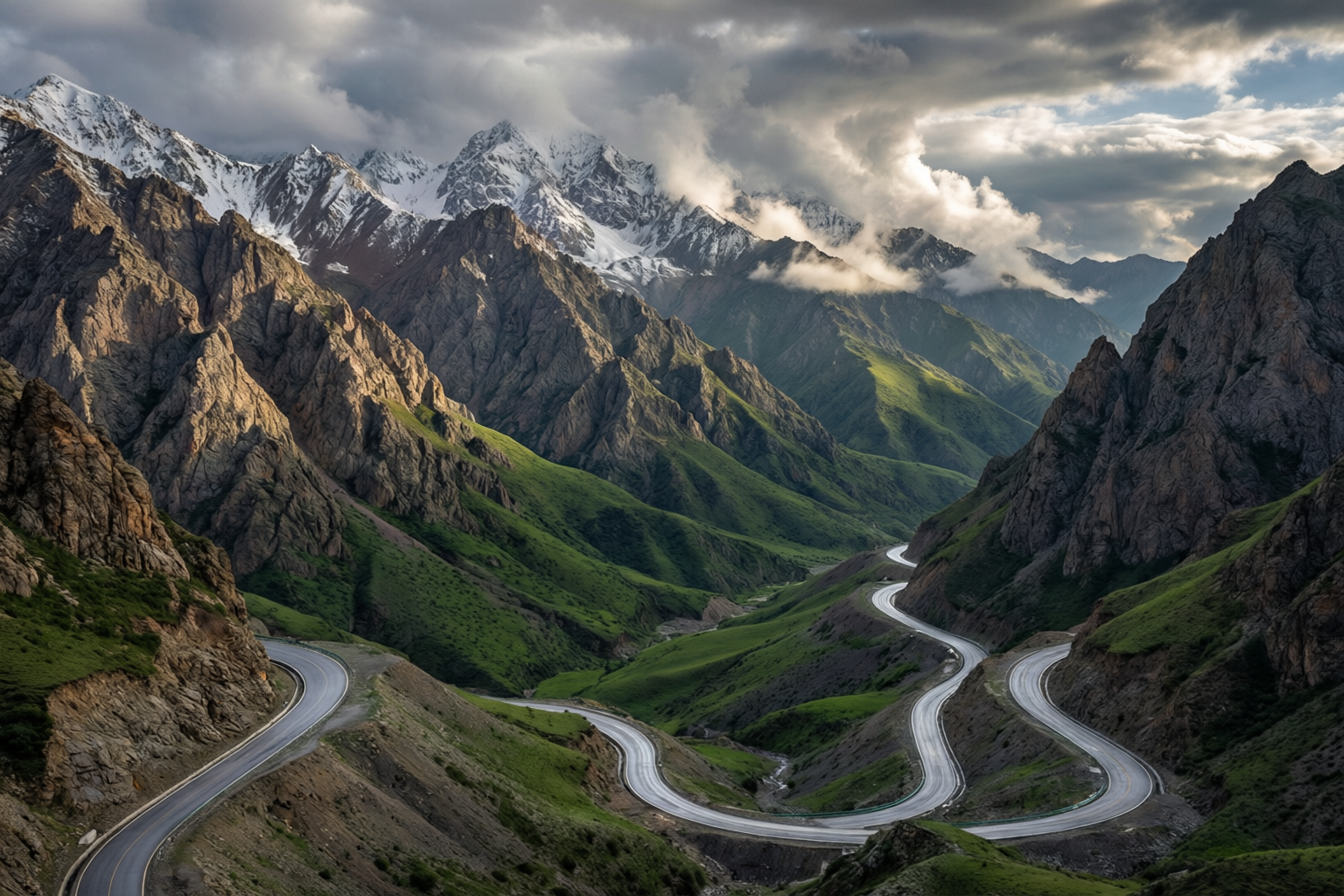
Stretching 561 kilometers from Dushanzi to Kucha, the G217 Duku Highway (独库公路) is far more than a road — it is an engineering marvel carved through the heart of the Tianshan Mountains, and widely regarded as China's most spectacular drive. Crossing four mountain passes above 3,000 meters, spanning deep gorges, endless grasslands, and red-rock deserts, this single highway compresses an entire continent's worth of landscapes into one unforgettable day behind the wheel.
The highway's history is as dramatic as its scenery. Between 1974 and 1983, approximately 10,000 soldiers of the People's Liberation Army spent a decade blasting tunnels, bridging gorges, and paving switchbacks through some of China's most unforgiving terrain. The human cost was immense: 168 soldiers lost their lives during construction, and a memorial cemetery near the Qiaerbuhai section stands as a solemn tribute to their sacrifice. When it finally opened, the Duku Highway connected northern and southern Xinjiang for the first time, cutting a journey that once required a 1,000-kilometer detour through Urumqi down to a single, breathtaking 561-kilometer route.
"Driving the Duku Highway is like flipping through a geography textbook — every turn of the wheel reveals a new chapter: snow peaks, alpine meadows, red canyons, and desert oases. Nothing else in China comes close." — SilkRoad Boutique Travel Team
Key Facts at a Glance
- Total distance: 561 km (349 miles) from Dushanzi to Kucha
- Highest point: Hashilegen Pass at 3,400 meters above sea level
- Construction: 1974–1983, built by 10,000 PLA soldiers
- 168 soldiers died during construction — memorial at Qiaerbuhai
- Open approximately late June to early October (weather dependent)
- Typical driving time: 10–14 hours (best split over 2–3 days)
When It's Open
The Duku Highway is one of the most seasonal roads in China. Due to extreme snowfall and avalanche risk in the Tianshan Mountains, the highway is typically open for only about three to four months per year — generally from late June to early October. The exact opening and closing dates vary every year depending on snow conditions, and the road authority makes the call based on safety assessments.
The window is so short because the highway crosses several passes above 3,000 meters where snow accumulates to depths of several meters during winter. Even in summer, sudden snowstorms can temporarily close the road. The Hashilegen Pass tunnel, at 3,400 meters, is particularly prone to ice buildup and requires constant maintenance.
| Period | Status | Notes |
|---|---|---|
| January – May | Closed | Heavy snow blocks all passes |
| Late June | Opening (varies) | Road crews clear snow; check status before departing |
| July – August | Peak season | Best conditions; busiest traffic; book accommodation early |
| September | Open | Fewer crowds; golden autumn colors; occasional early snow |
| Early October | Closing (varies) | Road may close abruptly with first heavy snowfall |
| November – December | Closed | Deep snow; avalanche risk |
How to Check Current Status
Before planning your trip, always verify the highway's current status. The most reliable methods include: checking the official Xinjiang Highway Administration Bureau (新疆公路管理局) WeChat account for daily updates; following the Dushanzi District traffic police on Douyin or Weibo; asking your hotel in Dushanzi or Kucha; or contacting SilkRoad Boutique for real-time road conditions if you are traveling with us.
Pro Tip: Best Time to Go
- Early July: snow walls still line the Hashilegen Pass — dramatic photos guaranteed
- Mid-July to mid-August: warmest weather, greenest grasslands, but most crowded
- September: quieter roads, golden light, perfect for photography — our team's favorite
Route Overview & Key Stops (North to South)
The Duku Highway's magic lies in its extraordinary variety. In just 561 kilometers, you pass through geological zones that would normally require weeks of travel to see independently. Here is your stop-by-stop guide, traveling from north (Dushanzi) to south (Kucha):
Dushanzi Grand Canyon (独山子大峡谷)
The dramatic starting point of the Duku Highway. This 200-meter-deep canyon, carved by the Kuitun River over millennia, features layered grey rock formations that look like another planet. A glass-bottom viewing platform extends over the abyss. Allow 1–2 hours to explore the walking trails before hitting the road.
Hashilegen Pass (哈希勒根达坂, 3,400m)
The highest point on the Duku Highway and its most iconic stretch. The road climbs through a tunnel carved into the mountain, flanked by towering snow walls even in mid-summer. The temperature drops sharply here — it is not unusual to go from 30°C at the base to near-freezing at the pass. Stop briefly for photos, but do not linger too long if you are sensitive to altitude.
Qiaerbuhai Swan Lake (乔尔布哈伊天鹅湖)
A serene alpine wetland where whooper swans migrate each spring to breed. The lake is surrounded by rolling green hills dotted with Kazakh yurts and grazing horses. Even if the swans have moved on by mid-summer, the landscape alone — mirror-like waters reflecting snow-capped peaks — makes this a must-stop. Nearby is the Duku Highway Martyrs' Cemetery honoring the 168 soldiers who perished.
Bayanbulak Grassland & Nine Springs (巴音布鲁克草原·九曲十八弯)
One of China's largest alpine grasslands and a UNESCO-recognized wetland reserve. The highlight is the Nine Springs and Eighteen Bends (九曲十八弯) viewpoint, where the Kaidu River winds through the grassland in graceful serpentine curves. At sunset, the river reflects the sky in a dazzling display of gold and orange — one of Xinjiang's most photographed scenes. Allow at least half a day; consider staying overnight in a traditional yurt.
Tielimaiti Pass (铁力买提达坂)
The second major mountain pass on the route, at approximately 3,200 meters. The approach features dramatic hairpin turns through a narrow gorge, and the descent on the southern side reveals a starkly different landscape — transitioning from green alpine meadows to dry, sun-baked rock. The Tielimaiti tunnel is a marvel of engineering, cutting directly through the mountain ridge.
Kizilya Grand Canyon / Red Canyon (克孜利亚大峡谷)
A breathtaking canyon of rust-red sandstone formations sculpted by wind and water over millions of years. The canyon walls glow in shades of crimson, ochre, and burnt orange, especially during the golden hours of early morning and late afternoon. The narrow gorge sections feel like walking through a natural cathedral. Entry fee is approximately ¥50 and the walking trail takes about 2 hours round-trip.
Tianchi Lake (天池, Nearby Detour)
If time permits, a detour to Tianchi (Heavenly Lake) near the Tianshan range is well worth the extra distance. This crystal-clear alpine lake sits at 1,910 meters, ringed by spruce forests and snow peaks. The lake has deep connections to Chinese mythology — legend says it was the bathing pool of the Queen Mother of the West. Boat rides and lakeside walks are available.
Kucha Ancient City (库车古城)
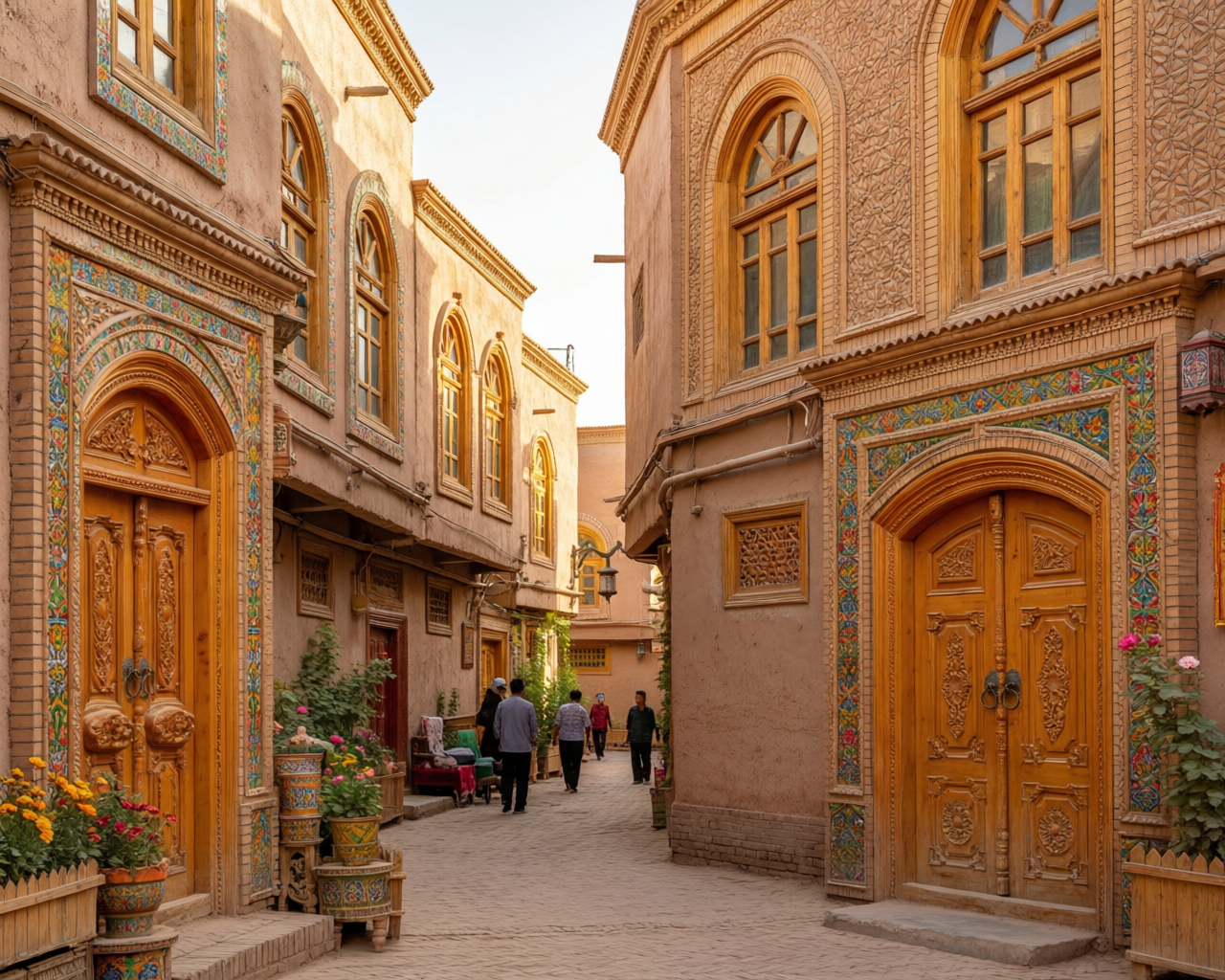
The southern terminus of the Duku Highway and one of the most historically rich cities on the ancient Silk Road. Kucha (also spelled Kuqa) was once a powerful Buddhist kingdom, and remnants of its ancient city walls, temples, and the stunning Kizil Thousand Buddha Caves are all within easy reach. The old town's narrow alleys, vibrant bazaars, and Uyghur bakeries make it the perfect place to celebrate completing the drive. Don't miss the enormous Kucha Grand Mosque.
Driving Tips
The Duku Highway is a well-maintained national highway, but its mountain terrain demands respect. Here is everything you need to know to drive it safely and enjoyably:
Vehicle Requirements
An SUV or crossover is recommended for the Duku Highway, primarily for ground clearance on uneven sections and better traction on steep grades. However, the road is paved throughout, so a standard sedan is entirely possible — many Chinese tourists complete the drive in compact cars. What matters most is that your vehicle is in good mechanical condition: check brakes, tires, coolant, and windshield washers before departure.
Fuel Stations
Fuel stations are sparse and unpredictable along the Duku Highway. The key refueling points are at Dushanzi (start), Bayanbulak (roughly midway), and Kuqa/Kucha (end). Between these, you may encounter one or two small stations, but they are not guaranteed to be open or stocked. Our golden rule: fill up at every opportunity. Keep your tank above half at all times. Consider carrying a spare 10-liter jerry can of fuel as emergency backup.
Speed Limits & Checkpoints
Expect strict speed enforcement throughout. The general speed limit is 40–60 km/h in mountain sections and 80 km/h on flatter stretches. There are numerous police checkpoints along the route — always have your passport, driver's license, and vehicle registration ready. Foreign travelers should also carry their hotel registration slip. The checkpoints are friendly but thorough, and they serve an important safety function on this challenging road.
Altitude Sickness Prevention
While the Duku Highway's highest point (3,400m) is not extreme by Tibetan Plateau standards, altitude can still affect sensitive individuals. Symptoms include headache, nausea, dizziness, and fatigue. To minimize risk: stay well hydrated; avoid alcohol the night before and during the drive; ascend gradually rather than rushing to the highest passes; consider taking Rhodiola rosea (红景天) supplements for a few days before the trip; and descend if symptoms become severe. Your SilkRoad Boutique guide carries supplemental oxygen as a precaution.
Weather: Four Seasons in One Day
请准备多层衣物,应对天气骤变。即使在7月,最高达坂的气温也可能降至接近零度,而低地可能超过35°C。">The Duku Highway is famous for experiencing all four seasons within a single day. You might start in blazing sunshine in Dushanzi, drive through rain and fog in the valleys, encounter snow and sleet at Hashilegen Pass, and finish in the dry desert heat approaching Kucha. Pack layers and be prepared for rapid changes. Even in July, temperatures at the highest passes can drop to near freezing, while the lowlands may exceed 35°C.
Road Conditions
The road surface is generally good asphalt, but watch for: hairpin turns on mountain approaches (use low gear and controlled speed); tunnels (turn on headlights, watch for ice patches inside); landslide areas (marked with signs — drive quickly and do not stop); livestock crossings (herds of sheep and cattle frequently cross the road, especially near Bayanbulak — stop and wait patiently); and rockfall zones (more common after rain — check road reports before departing).
Prefer to Sit Back and Enjoy the Views?
Let our experienced local drivers handle the mountain roads while you take in the scenery. Our Duku Highway tour packages include luxury vehicles, expert guides, and handpicked accommodation.
Book Your Duku Highway TourGuided Tour vs Self-Drive
One of the first decisions travelers face is whether to self-drive or join a guided tour. Both approaches have genuine merits, and the right choice depends on your comfort level, travel style, and visa/documentation situation.
| Factor | Self-Drive | Guided Tour |
|---|---|---|
| Flexibility | Complete control over stops and schedule | Pre-planned itinerary with expert commentary |
| Safety | You handle mountain driving yourself | Experienced local driver who knows every curve |
| Language | Checkpoints and signs in Chinese only | English-speaking guide handles all communication |
| Foreign Visitors | May face restrictions; some sections require permits | Tour operator arranges all necessary permits |
| Cost | Lower base cost; fuel and accommodation extra | Higher but all-inclusive; better value for groups |
| Navigation | Cell signal gaps make offline maps essential | Guide navigates; you enjoy the scenery |
Our recommendation: For most international visitors, a guided tour with a service like SilkRoad Boutique is the wisest choice. Foreign travelers may encounter permit requirements or checkpoint complications that a local operator handles seamlessly. You also gain invaluable cultural context from an expert guide, and our drivers know the road intimately — they can anticipate weather changes, suggest secret viewpoints, and handle emergencies. If you are an experienced driver with strong Chinese language skills and the proper documentation, self-driving is an unforgettable adventure.
Accommodation Along the Route
Accommodation on the Duku Highway ranges from basic guesthouses to surprisingly comfortable boutique options. During peak season (July–August), rooms fill fast — book at least 2–3 weeks in advance. Here are the best options at each major stop:
Dushanzi (Starting Point)
As a petrochemical city, Dushanzi has several business hotels of decent quality. The Dushanzi Hotel and Jinjiang Inn both offer clean, modern rooms with hot showers — ideal for a restful night before the big drive. Budget from ¥200–400 per night.
Bayanbulak Grassland
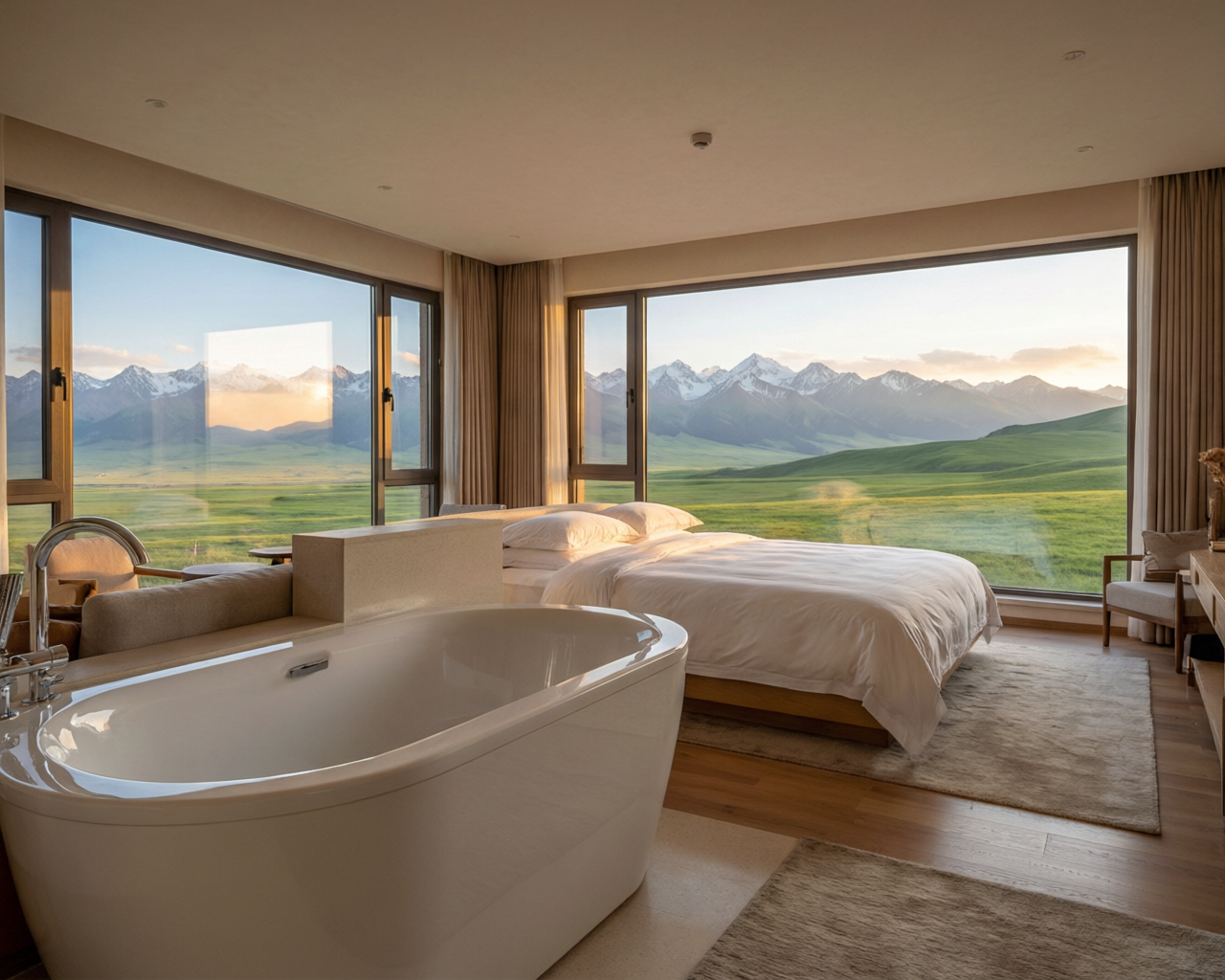
The highlight accommodation experience on the Duku Highway. Stay in a traditional Mongolian yurt (蒙古包) on the grassland for a genuinely immersive experience. Many yurt camps now offer upgraded versions with real beds, electric blankets, and private bathrooms. Alternatively, the Bayanbulak town has small hotels and guesthouses. Budget: ¥300–600 per night for yurt camps.
Kucha (End Point)
Kucha offers the widest selection of accommodation on the route, from budget chains to boutique hotels. The Kucha Hotel (库车饭店) is a solid mid-range option with Silk Road-themed decor, while the newer Kuchar International Hotel caters to international guests with English-speaking staff. Budget from ¥250–500 per night.
Pro tip: If you split the drive over two days (which we strongly recommend), overnight at Bayanbulak. Watching the sunset at Nine Springs and Eighteen Bends, then waking up to the grassland sunrise, is worth every minute of the extended itinerary.
Photography Guide
The Duku Highway is a photographer's dream, offering a staggering diversity of landscapes within a single day's drive. Here are the best viewpoints and photography tips from our team who has driven this road dozens of times:
Dushanzi Canyon
The layered grey rock formations create dramatic contrast against blue skies. Use a polarizing filter to enhance textures.
Best: Early morningHashilegen Snow Walls
The towering snow walls lining the road in early summer create surreal, otherworldly compositions. Wide-angle lens recommended.
Best: Mid-morningBayanbulak Nine Springs
The serpentine river at sunset is one of China's most iconic photographs. Arrive 90 minutes before sunset to secure your spot.
Best: Golden hour / SunsetKizilya Red Canyon
The crimson walls glow intensely during golden hour. Shoot with warm white balance to capture the full depth of color.
Best: Late afternoonDrone Regulations
Drone photography offers breathtaking aerial perspectives of the Duku Highway, but regulations are strict. You must register your drone with China's Civil Aviation Administration (CAAC) before arrival. Flying is prohibited near military installations, airports, and certain government facilities. In Xinjiang specifically, drone flights require additional permits that are difficult for foreign visitors to obtain independently. Our recommendation: leave the drone at home unless you are part of an organized tour where SilkRoad Boutique can arrange the necessary permits in advance.
Packing List
The key to packing for the Duku Highway is layering. You will experience temperature swings of 30°C or more within a single day. Here is our tested packing list:
Clothing (Layers)
- Lightweight base layer (moisture-wicking)
- Fleece or down mid-layer
- Waterproof/windproof outer shell
- Warm hat and gloves (for passes)
- Sun hat and sunglasses (UV is intense)
- Comfortable hiking shoes
Health & Safety
- Sunscreen SPF 50+ (high altitude UV)
- Altitude sickness medication (红景天)
- Basic first aid kit
- Motion sickness pills (for winding roads)
- Lip balm and moisturizer (very dry air)
- Reusable water bottle (stay hydrated)
Electronics
- Power bank 10,000+ mAh (essential)
- Car phone mount + charger
- Camera with wide-angle lens
- Offline maps downloaded in advance
- Flashlight or headlamp
Documents & Practical
- Passport (required at checkpoints)
- Chinese driver's license or IDP
- Vehicle registration and insurance
- Cash in yuan (small denominations)
- Snacks and dried food for long stretches
- Plastic bags (for wet clothes/trash)